Monday, February 18, 2013

BIG PRINTING PRESS

Press Room Littel PressThe Statesman has four printing presses. There are three Goss/Metroliner presses which cost around $10 million each. And those are the smaller presses!

The large printing press above is nicknamed “Big Blue” and was purchased from a company in Germany called KBA. This is the Statesman’s newest press and it was a $28 million project for the newspaper. The press itself cost $14 million. The pressroom actually had to be expanded to fit the huge Big Blue inside, which cost another $14 million. Big Blue is six stories high and more than 60 feet tall!

The Statesman uses offset printing. This means images are first etched onto the aluminum plates that are then mounted onto printing press rollers and inked with a combination of water and ink. The ink adheres to the areas with emulsion. Water then washes away the excess ink. A blanket roller picks up the ink and transfers it to the newsprint. The aluminum plates never touch the paper directly, which is the reason for the name offset.

Press operators monitor the newspapers as they are being printed, visually checking them for print and color quality. They don’t stop the presses to make adjustments; they use computers to change what the presses are doing as they are running.
The operators make these changes from computer consoles in “quiet rooms,” which are small, enclosed rooms where operators can shut the door and concentrate away from the noise of the presses.

The Statesman presses can print an average of 1,000 papers a minute. That’s 70,000 papers per hour! However, the presses usually do not operate at full speed to maintain quality control. The average speed for producing the best looking product is 55,000 papers in an hour.
If the paper tears – a “web break” – newsprint is often referred to as “web” – the press will shut down automatically. Operators must rethread the paper by hand, slowly and carefully. In fact, the paper goes so quickly through the press that it can become brittle. To prevent this, the pressroom must be kept moist by using a sprinkler system.

Modern Printing Press

The printing press, today, is a device for printing multiple copies of text onto paper, cloth, or other substances (the print medium). Pressure is applied to an inked surface which rests on the print medium, transferring the image to the medium. The most typical use of the printing press is for text, but visual images are also transferred with a printing press.
With the advent of the printing press, bookmaking became a mechanical process, leading to the mass production of printed material in an assembly line manner.
Modern printing presses are ‘typeset’ by use of a computer, with the characters to be transferred onto the medium. There are many fonts and typeset forms used; this in itself has become an art form in the printing world. Printing occurs in black and white, and also in color. Newspapers, brochures, pamphlets, leaflets, flyers and other items are produced on printing presses.
The press machines themselves come in many different models and sizes. A small business will use a press which is very different in configuration from that used by a newspaper or book publisher. Trained and skilled operators are needed to run the machinery.

The first printing press was invented in China in 1041. The earliest known printed text (868 AD), the Diamond Sutra, was prepared with the block printing method, where individual sheets of paper were manually rubbed and pressed into individually carved wooden blocks, one at a time. A new block was hand carved for each page. Early European Bibles were also printed in this manner. It was time consuming work. Books were also laboriously hand copied in European monasteries; because of the intensely time consuming labor of the task, few copies were made and they were not disseminated widely,
The printing press that we are more familiar with was invented by Johann Gutenberg in approximately 1440 to 1450. A Dutchman, Laurens Janszoon Coster, has also been credited with this invention. This press improved on the block method by using screw presses, such as is found in wine presses or olive oil presses. This method applied direct pressure onto a flat plane (platen). The Gutenberg system also encompassed a complete system through all phases, from reusable metal (durable lead, tin and antimony) characters (type) to a way of changing and inserting fresh paper rapidly. The moveable type was used in molds. Mass production of books became reality, which had previously been impossible with the block method (or hand copying before that).
Within a few short decades printing presses spread from Gutenberg’s hometown of Mainz, Germany to hundreds of cities in many European countries. The invention of the printing press and its subsequent spread throughout Europe and then the world have been called the most influential events of the second millennium, radically changing the way people thought. Information was then readily available to almost everyone. Knowledge spread rapidly. Mass communication by printed word altered society forever. Political power was challenged; religious authorities were questioned. The literacy rate rose, abolishing elite class differentiations. Education and learning were available to the middle classes. This led to an even higher demand for books. Luther’s tracts became ‘best sellers’. The literacy rate rose with the availability of material.
By the nineteenth century the hand-operated Gutenberg screw press was replaced with steam powered rotary presses. Printing grew from mass production numbers to an industrial bulk scale.
The success of early paper manufacturers was furthered by water-powered paper mills. No longer was papermaking a laborious manual task. Formulation of inks was successful, and high quality printing was the result.
Because books were now mass produced the costs dropped, making them more easily affordable and accessible to more people. Scientists spread discoveries more readily and easily, resulting in a scientific revolution. Information and ideas circulated quickly. Copyright laws and intellectual property rights came into being. Spelling and syntax became more uniform.
Typesetting, the placement of characters, became an art form.
While the mechanics of the printing press did not change much from the time of inception until the early 1800s, new materials did improve the process. Iron came to be used in the machinery, allowing for a larger machine; this resulted in the ability to double the output capacity of the presses. Other limitations were abolished with the use of steam power to run the machines (as opposed to water mill power), and the replacement of the printing flatbed with cylinders which moved in a rotary fashion.  The early model of this improved version allowed for two-sided printing, and newspapers became available to the masses, further spreading information and allowing for more literacy.
A steam powered rotary printing press was invented in the United States in 1843. It was now possible to print millions of copies of a page daily. Paper was also manufactured into rolls, which allowed for a continuous feed through the printing press, for a faster printing run.
The mid-1800s saw the development of ‘jobbing presses’, which were small presses for letterheads, business cards, envelopes, and smaller items. These were easily and quickly set up, and led to quick production, although some of them were still treadle powered.

Industrial printing presses

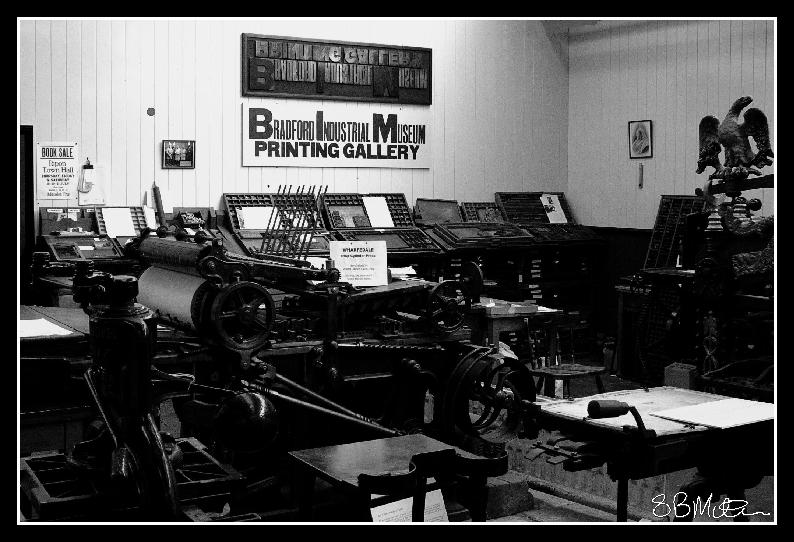
At the dawn of the Industrial Revolution, the mechanics of the hand-operated Gutenberg-style press were still essentially unchanged, although new materials in its construction, amongst other innovations, had gradually improved its printing efficiency. By 1800, Lord Stanhope had built a press completely from cast iron which reduced the force required by 90%, while doubling the size of the printed area. With a capacity of 480 pages per hour, it doubled the output of the old style press. Nonetheless, the limitations inherent to the traditional method of printing became obvious.

Two ideas altered the design of the printing press radically: First, the use of steam power for running the machinery, and second the replacement of the printing flatbed with the rotary motion of cylinders. Both elements were for the first time successfully implemented by the German printer Friedrich Koenig in a series of press designs devised between 1802 and 1818. Having moved to London in 1804, Koenig soon met Thomas Bensley and secured financial support for his project in 1807. Patented in 1810, Koenig had designed a steam press "much like a hand press connected to a steam engine." The first production trial of this model occurred in April 1811. He produced his machine with assistance from German engineer Andreas Friedrich Bauer.

Koenig and Bauer sold two of their first models to The Times in London in 1814, capable of 1,100 impressions per hour. The first edition so printed was on 28 November 1814. They went on to perfect the early model so that it could print on both sides of a sheet at once. This began the long process of making newspapers available to a mass audience (which in turn helped spread literacy), and from the 1820s changed the nature of book production, forcing a greater standardization in titles and other metadata. Their company Koenig & Bauer AG is still one of the world's largest manufacturers of printing presses today.

The steam powered rotary printing press, invented in 1843 in the United States by Richard M. Hoe, allowed millions of copies of a page in a single day. Mass production of printed works flourished after the transition to rolled paper, as continuous feed allowed the presses to run at a much faster pace.

Also, in the middle of the 19th century, there was a separate development of jobbing presses, small presses capable of printing small-format pieces such as billheads, letterheads, business cards, and envelopes. Jobbing presses were capable of quick set-up (average setup time for a small job was under 15 minutes) and quick production (even on treadle-powered jobbing presses it was considered normal to get 1,000 impressions per hour [iph] with one pressman, with speeds of 1,500 iph often attained on simple envelope work).[citation needed] Job printing emerged as a reasonably cost-effective duplicating solution for commerce at this time.

By the late 1930s or early 1940s, printing presses had increased substantially in efficiency: a model by Platen Printing Press was capable of performing 2,500 to 3,000 impressions per hour.

Book printing as art form

For years, book printing was considered a true art form. Typesetting, or the placement of the characters on the page, including the use of ligatures, was passed down from master to apprentice. In Germany, the art of typesetting was termed the "black art," in allusion to the ink-covered printers. It has largely been replaced by computer typesetting programs, which make it easy to get similar results more quickly and with less physical labor. Some practitioners continue to print books the way Gutenberg did. For example, there is a yearly convention of traditional book printers in Mainz, Germany.

Some theorists, such as McLuhan, Eisenstein, Kittler, and Giesecke, see an "alphabetic monopoly" as having developed from printing, removing the role of the image from society. Other authors stress that printed works themselves are a visual medium. Certainly, modern developments in printing have revitalized the role of illustrations.

Circulation of information and ideas

The printing press was also a factor in the establishment of a community of scientists who could easily communicate their discoveries through the establishment of widely disseminated scholarly journals, helping to bring on the scientific revolution. Because of the printing press, authorship became more meaningful and profitable. It was suddenly important who had said or written what, and what the precise formulation and time of composition was. This allowed the exact citing of references, producing the rule, "One Author, one work (title), one piece of information" (Giesecke, 1989; 325). Before, the author was less important, since a copy of Aristotle made in Paris would not be exactly identical to one made in Bologna. For many works prior to the printing press, the name of the author has been entirely lost.

Because the printing process ensured that the same information fell on the same pages, page numbering, tables of contents, and indices became common, though they previously had not been unknown. The process of reading also changed, gradually moving over several centuries from oral readings to silent, private reading.[citation needed] The wider availability of printed materials also led to a drastic rise in the adult literacy rate throughout Europe.

The printing press was an important step towards the democratization of knowledge. Within fifty or sixty years of the invention of the printing press, the entire classical canon had been reprinted and widely promulgated throughout Europe (Eisenstein, 1969; 52). Now that more people had access to knowledge both new and old, more people could discuss these works. Furthermore, now that book production was a more commercial enterprise, the first copyright laws[citation needed] were passed to protect what we now would call intellectual property rights[citation needed]. On the other hand, the printing press was criticized for allowing the dissemination of information which may have been incorrect.
A second outgrowth of this popularization of knowledge was the decline of Latin as the language of most published works, to be replaced by the vernacular language of each area, increasing the variety of published works. The printed word also helped to unify and standardize the spelling and syntax of these vernaculars, in effect 'decreasing' their variability. This rise in importance of national languages as opposed to pan-European Latin is cited as one of the causes of the rise of nationalism in Europe.

Mass production and spread of printed books

The invention of mechanical movable type printing led to a large increase in printing activities across Europe within only a few decades. From a single print shop in Mainz, Germany, printing had spread to no less than around 270 cities in Central, Western and Eastern Europe by the end of the 15th century. As early as 1480, there were printers active in 110 different places in Germany, Italy, France, Spain, the Netherlands, Belgium, Switzerland, England, Bohemia and Poland. From that time on, it is assumed that "the printed book was in universal use in Europe".
In Italy, a center of early printing, print shops had been established in 77 cities and towns by 1500. At the end of the following century, 151 locations in Italy had seen at one time printing activities, with a total of nearly three thousand printers known to be active. Despite this proliferation, printing centres soon emerged; thus, one third of the Italian printers published in Venice.
By 1500, the printing presses in operation throughout Western Europe had already produced more than twenty million copies. In the following century, their output rose tenfold to an estimated 150 to 200 million copies.
European printing presses of around 1600 were capable of producing 3,600 impressions per workday.
By comparison, movable type printing in the Far East, which did not know presses and was solely done by manually rubbing the back of the paper to the page, did not exceed an output of forty pages per day.
The vast printing capacities meant that individual authors could now become true bestsellers: Of Erasmus's work, at least 750,000 copies were sold during his lifetime alone (1469–1536). In the early days of the Reformation, the revolutionary potential of bulk printing took princes and papacy alike by surprise. In the period from 1518 to 1524, the publication of books in Germany alone skyrocketed sevenfold; between 1518 and 1520, Luther's tracts were distributed in 300,000 printed copies.
The rapidity of typographical text production, as well as the sharp fall in unit costs, led to the issuing of the first newspapers (see Relation) which opened up an entirely new field for conveying up-to-date information to the public.
A lasting legacy are the prized incunable, surviving pre-16th century print works which are collected by many of the most prestigious libraries in Europe and North America.

The printing revolution

The phenomenon of the printing revolution can be approached from a quantitative perspective which has its focus on the printing output and the spread of the related technology. It can also be analysed in terms of how the wide circulation of information and ideas acted as an "agent of change" (Eisenstein) in Europe and global society in general.

Gutenberg's press

Johannes Gutenberg's work on the printing press began in approximately 1436 when he partnered with Andreas Dritzehn—a man he had previously instructed in gem-cutting—and Andreas Heilmann, owner of a paper mill. However, it was not until a 1439 lawsuit against Gutenberg that an official record exists; witnesses' testimony discussed Gutenberg's types, an inventory of metals (including lead), and his type molds.

Having previously worked as a professional goldsmith, Gutenberg made skillful use of the knowledge of metals he had learned as a craftsman. He was the first to make type from an alloy of lead, tin, and antimony, which was critical for producing durable type that produced high-quality printed books and proved to be much better suited for printing than all other known materials. To create these lead types, Gutenberg used what is considered one of his most ingenious inventions, a special matrix enabling the quick and precise molding of new type blocks from a uniform template. His type case is estimated to have contained around 290 separate letter boxes, most of which were required for special characters, ligatures, punctuation marks, etc.

Gutenberg is also credited with the introduction of an oil-based ink which was more durable than the previously used water-based inks. As printing material he used both paper and vellum (high-quality parchment).

In the Gutenberg Bible, Gutenberg made a trial of coloured printing for a few of the page headings, present only in some copies. A later work, the Mainz Psalter of 1453, presumably designed by Gutenberg but published under the imprint of his successors Johann Fust and Peter Schöffer, had elaborate red and blue printed initials.

See printing press working

A printing press, in its classical form, is a standing mechanism, ranging from 5 to 7 feet long, 3 feet wide, and 7 feet tall. Type, or small metal letters that have a raised letter on each end, is arranged into pages and placed in a frame to make a forme, which itself is placed onto a flat stone, 'bed,' or 'coffin.' The text in inked using two pads mounted on handles. These pads were stuffed with sheeps wool and were inked. This ink was then applied to the text evenly. One damp piece of paper was then taken from a heap of paper and placed on the tympan. The paper was damp as this lets the type 'bite' into the paper better. Small pins hold the paper in place. The paper is now held between a frisket and tympan (two frames covered with paper or parchment). These are folded down, so that the paper lies on the surface of the inked type. The bed is rolled under the platen, using a windlass mechanism. A small rotating handle is used called the 'rounce' to do this, and the impression is made with a screw that transmits pressure through the platen. To turn the screw the long handle attached to it is turned. This is know as the bar or 'Devil's Tail.' Then the screw is reversed, the windlass turned again to move the bed back to its original position, the tympan and frisket raised and opened, and the printed sheet removed. Such presses were always worked by hand. After around 1800, iron presses were developed, some of which could be operated by steam power.

Technological factors

At the same time, a number of medieval products and technological processes had reached a level of maturity which allowed their potential use for printing purposes. Gutenberg took up these far-flung strands, combined them into one complete and functioning system, and perfected the printing process through all its stages by adding a number of inventions and innovations of his own:
The screw press which allowed direct pressure to be applied on flat-plane was already of great antiquity in Gutenberg's time and was used for a wide range of tasks. Introduced in the 1st century AD by the Romans, it was commonly employed in agricultural production for pressing wine grapes and (olive) oil fruit, both of which formed an integral part of the mediterranean and medieval diet. The device was also used from very early on in urban contexts as a cloth press for printing patterns. Gutenberg may have also been inspired by the paper presses which had spread through the German lands since the late 14th century and which worked on the same mechanical principles.

Gutenberg adopted the basic design, thereby mechanizing the printing process. Printing, however, put a demand on the machine quite different from pressing. Gutenberg adapted the construction so that the pressing power exerted by the platen on the paper was now applied both evenly and with the required sudden elasticity. To speed up the printing process, he introduced a movable undertable with a plane surface on which the sheets could be swiftly changed.The concept of movable type was not entirely new in the 15th century; sporadic evidence that the typographical principle, the idea of creating a text by reusing individual characters, was well understood and employed in pre-Gutenberg Europe had been cropping up since the 12th century and possibly before. The known examples range from Germany (Prüfening inscription) to England (letter tiles) to Italy. However, the various techniques employed (imprinting, punching and assembling individual letters) did not have the refinement and efficiency needed to become widely accepted.

Gutenberg greatly improved the process by treating typesetting and printing as two separate work steps. A goldsmith by profession, he created his type pieces from a lead-based alloy which suited printing purposes so well that it is still used today. The mass production of metal letters was achieved by his key invention of a special hand mould, the matrix. The Latin alphabet proved to be an enormous advantage in the process because, in contrast to logographic writing systems, it allowed the type-setter to represent any text with a theoretical minimum of only around two dozen different letters.

Another factor conducive to printing arose from the book existing in the format of the codex, which had originated in the Roman period. Considered the most important advance in the history of the book prior to printing itself, the codex had completely replaced the ancient scroll at the onset of the Middle Ages (500 AD). The codex holds considerable practical advantages over the scroll format; it is more convenient to read (by turning pages), is more compact, less costly, and, in particular, unlike the scroll, both recto and verso could be used for writing − and printing.
A fourth development was the early success of medieval papermakers at mechanizing paper manufacture. The introduction of water-powered paper mills, the first certain evidence of which dates to 1282,allowed for a massive expansion of production and replaced the laborious handcraft characteristic of both Chinese and Muslim papermaking. Papermaking centres began to multiply in the late 13th century in Italy, reducing the price of paper to one sixth of parchment and then falling further; papermaking centers reached Germany a century later.

Despite this it appears that the final breakthrough of paper depended just as much on the rapid spread of movable-type printing. It is notable that codices of parchment, which in terms of quality is superior to any other writing material, still had a substantial share in Gutenberg's edition of the 42-line Bible. After much experimentation, Gutenberg managed to overcome the difficulties which traditional water-based inks caused by soaking the paper, and found the formula for an oil-based ink suitable for high-quality printing with metal type.

History of printing

The history of printing started around 3000 BC with the duplication of images. The use of round cylinder seals for rolling an impress onto clay tablets goes back to early Mesopotamian civilization before 3000 BC, where they are the most common works of art to survive, and feature complex and beautiful images. In both China and Egypt, the use of small stamps for seals preceded the use of larger blocks. In Europe and India, the printing of cloth certainly preceded the printing of paper or papyrus; this was probably also the case in China. The process is essentially the same - in Europe special presentation impressions of prints were often printed on silk until at least the seventeenth century.

History

Block printing first came to Christian Europe as a method for printing on cloth, where it was common by 1300. Images printed on cloth for religious purposes could be quite large and elaborate, and when paper became relatively easily available, around 1400, the medium transferred very quickly to small woodcut religious images and playing cards printed on paper. These prints were produced in very large numbers from about 1425 onward.

Around the mid-fifteenth-century, block-books, woodcut books with both text and images, usually carved in the same block, emerged as a cheaper alternative to manuscripts and books printed with movable type. These were all short heavily illustrated works, the bestsellers of the day, repeated in many different block-book versions: the Ars moriendi and the Biblia pauperum were the most common. There is still some controversy among scholars as to whether their introduction preceded or, the majority view, followed the introduction of movable type, with the range of estimated dates being between about 1440 and 1460.

Printing press

A printing press is a device for evenly printing ink onto a print medium (substrate) such as paper or cloth. The device applies pressure to a print medium that rests on an inked surface made of moveable type, thereby transferring the ink. Typically used for texts, the invention and spread of the printing press are widely regarded as among the most influential events in the second millennium revolutionizing the way people conceive and describe the world they live in, and ushering in the period of modernity.

The invention of printing is credited to Johannes Gutenberg in 1450 although earlier versions are described in the history of printing. The exact date of Gutenberg's press is debated based on existing screw presses. Gutenberg, a goldsmith by profession, developed a printing system by both adapting existing technologies and making inventions of his own. His newly devised hand mould made possible the rapid creation of metal movable type in large quantities. The printing press displaced earlier methods of printing and led to the first assembly line-style mass production of books. A single Renaissance printing press could produce 3,600 pages per workday, compared to about 2,000 by typographic block-printing and a few by hand-copying. Books of bestselling authors like Luther or Erasmus were sold by the hundreds of thousands in their lifetime.
Printing soon spread from Mainz, Germany to over two hundred cities in a dozen European countries. By 1500, printing presses in operation throughout Western Europe had already produced more than twenty million volumes. In the 16th century, with presses spreading further afield, their output rose tenfold to an estimated 150 to 200 million copies. The operation of a press became so synonymous with the enterprise of printing that it lent its name to a new branch of media, the press. The importance of printing as an emblem of modern achievement and of the ability of so-called Moderns to rival the Ancients, in whose teachings much of Renaissance learning was grounded, was enhanced by the frequent juxtaposition of the recent invention of printing to those of firearms and the nautical compass. In 1620, the English philosopher Francis Bacon indeed wrote that these three inventions "changed the whole face and state of the world".

In Renaissance Europe, the arrival of mechanical movable type printing introduced the era of mass communication which permanently altered the structure of society. The relatively unrestricted circulation of information and (revolutionary) ideas transcended borders, captured the masses in the Reformation and threatened the power of political and religious authorities; the sharp increase in literacy broke the monopoly of the literate elite on education and learning and bolstered the emerging middle class. Across Europe, the increasing cultural self-awareness of its people led to the rise of proto-nationalism, accelerated by the flowering of the European vernacular languages to the detriment of Latin's status as lingua franca. In the 19th century, the replacement of the hand-operated Gutenberg-style press by steam-powered rotary presses allowed printing on an industrial scale, while Western-style printing was adopted all over the world, becoming practically the sole medium for modern bulk printing.