If you require any more information or have any questions about our
privacy policy, please feel free to contact us by email at
dewitingkaegakkaruan@gmail.com.
At http://history-of-printing-machinery.blogspot.com/, the privacy of
our visitors is of extreme importance to us. This privacy policy
document outlines the types of personal information is received and
collected by http://history-of-printing-machinery.blogspot.com/ and how
it is used.
Log Files
Like many other Web sites,
http://history-of-printing-machinery.blogspot.com/ makes use of log
files. The information inside the log files includes internet protocol (
IP ) addresses, type of browser, Internet Service Provider ( ISP ),
date/time stamp, referring/exit pages, and number of clicks to analyze
trends, administer the site, track user’s movement around the site, and
gather demographic information. IP addresses, and other such information
are not linked to any information that is personally identifiable.
Cookies and Web Beacons
http://history-of-printing-machinery.blogspot.com/ does use cookies to
store information about visitors preferences, record user-specific
information on which pages the user access or visit, customize Web page
content based on visitors browser type or other information that the
visitor sends via their browser.
DoubleClick DART Cookie
.:: Google, as a third party vendor, uses cookies to serve ads on http://history-of-printing-machinery.blogspot.com/.
.:: Google's use of the DART cookie enables it to serve ads to users
based on their visit to
http://history-of-printing-machinery.blogspot.com/ and other sites on
the Internet.
.:: Users may opt out of the use of the DART cookie by visiting the
Google ad and content network privacy policy at the following URL -
http://www.google.com/privacy_ads.html
Some of our advertising partners may use cookies and web beacons on our site. Our advertising partners include ....
Google Adsense
These third-party ad servers or ad networks use technology to the
advertisements and links that appear on
http://history-of-printing-machinery.blogspot.com/ send directly to your
browsers. They automatically receive your IP address when this occurs.
Other technologies ( such as cookies, JavaScript, or Web Beacons ) may
also be used by the third-party ad networks to measure the effectiveness
of their advertisements and / or to personalize the advertising content
that you see.
http://history-of-printing-machinery.blogspot.com/ has no access to or
control over these cookies that are used by third-party advertisers.
You should consult the respective privacy policies of these third-party
ad servers for more detailed information on their practices as well as
for instructions about how to opt-out of certain practices.
http://history-of-printing-machinery.blogspot.com/'s privacy policy does
not apply to, and we cannot control the activities of, such other
advertisers or web sites.
If you wish to disable cookies, you may do so through your individual
browser options. More detailed information about cookie management with
specific web browsers can be found at the browsers' respective websites.
Monday, August 26, 2013

Monday, August 5, 2013
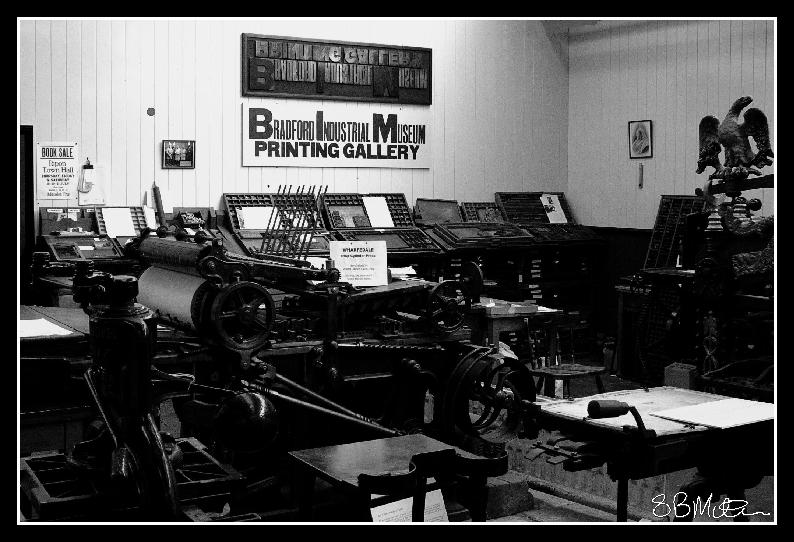
colection of printing machine
The International Printing Museum features the Ernest A. Lindner
Collection of Antique Printing Machinery considered by many authorities
to be one of the largest, most comprehensive collections of historic
graphic arts equpment in the world. The Lindner Collection features many
notable developments in the history of printing. Here you can explore
highlights of our current collection.


Tuesday, July 23, 2013
Privacy Policy
If you require any more information or have any questions about our
privacy policy, please feel free to contact us by email at
dewitingkaegakkaruan@gmail.com.
At http://history-of-printing-machinery.blogspot.com/, the privacy of our visitors is of extreme importance to us. This privacy policy document outlines the types of personal information is received and collected by http://history-of-printing-machinery.blogspot.com/ and how it is used.
Log Files
Like many other Web sites, http://history-of-printing-machinery.blogspot.com/ makes use of log files. The information inside the log files includes internet protocol ( IP ) addresses, type of browser, Internet Service Provider ( ISP ), date/time stamp, referring/exit pages, and number of clicks to analyze trends, administer the site, track user’s movement around the site, and gather demographic information. IP addresses, and other such information are not linked to any information that is personally identifiable.
Cookies and Web Beacons
http://history-of-printing-machinery.blogspot.com/ does use cookies to store information about visitors preferences, record user-specific information on which pages the user access or visit, customize Web page content based on visitors browser type or other information that the visitor sends via their browser.
DoubleClick DART Cookie
.:: Google, as a third party vendor, uses cookies to serve ads on http://history-of-printing-machinery.blogspot.com/.
.:: Google's use of the DART cookie enables it to serve ads to users based on their visit to http://history-of-printing-machinery.blogspot.com/ and other sites on the Internet.
.:: Users may opt out of the use of the DART cookie by visiting the Google ad and content network privacy policy at the following URL - http://www.google.com/privacy_ads.html
Some of our advertising partners may use cookies and web beacons on our site. Our advertising partners include ....
Google Adsense
These third-party ad servers or ad networks use technology to the advertisements and links that appear on http://history-of-printing-machinery.blogspot.com/ send directly to your browsers. They automatically receive your IP address when this occurs. Other technologies ( such as cookies, JavaScript, or Web Beacons ) may also be used by the third-party ad networks to measure the effectiveness of their advertisements and / or to personalize the advertising content that you see.
http://history-of-printing-machinery.blogspot.com/ has no access to or control over these cookies that are used by third-party advertisers.
You should consult the respective privacy policies of these third-party ad servers for more detailed information on their practices as well as for instructions about how to opt-out of certain practices. http://history-of-printing-machinery.blogspot.com/'s privacy policy does not apply to, and we cannot control the activities of, such other advertisers or web sites.
If you wish to disable cookies, you may do so through your individual browser options. More detailed information about cookie management with specific web browsers can be found at the browsers' respective websites.
At http://history-of-printing-machinery.blogspot.com/, the privacy of our visitors is of extreme importance to us. This privacy policy document outlines the types of personal information is received and collected by http://history-of-printing-machinery.blogspot.com/ and how it is used.
Log Files
Like many other Web sites, http://history-of-printing-machinery.blogspot.com/ makes use of log files. The information inside the log files includes internet protocol ( IP ) addresses, type of browser, Internet Service Provider ( ISP ), date/time stamp, referring/exit pages, and number of clicks to analyze trends, administer the site, track user’s movement around the site, and gather demographic information. IP addresses, and other such information are not linked to any information that is personally identifiable.
Cookies and Web Beacons
http://history-of-printing-machinery.blogspot.com/ does use cookies to store information about visitors preferences, record user-specific information on which pages the user access or visit, customize Web page content based on visitors browser type or other information that the visitor sends via their browser.
DoubleClick DART Cookie
.:: Google, as a third party vendor, uses cookies to serve ads on http://history-of-printing-machinery.blogspot.com/.
.:: Google's use of the DART cookie enables it to serve ads to users based on their visit to http://history-of-printing-machinery.blogspot.com/ and other sites on the Internet.
.:: Users may opt out of the use of the DART cookie by visiting the Google ad and content network privacy policy at the following URL - http://www.google.com/privacy_ads.html
Some of our advertising partners may use cookies and web beacons on our site. Our advertising partners include ....
Google Adsense
These third-party ad servers or ad networks use technology to the advertisements and links that appear on http://history-of-printing-machinery.blogspot.com/ send directly to your browsers. They automatically receive your IP address when this occurs. Other technologies ( such as cookies, JavaScript, or Web Beacons ) may also be used by the third-party ad networks to measure the effectiveness of their advertisements and / or to personalize the advertising content that you see.
http://history-of-printing-machinery.blogspot.com/ has no access to or control over these cookies that are used by third-party advertisers.
You should consult the respective privacy policies of these third-party ad servers for more detailed information on their practices as well as for instructions about how to opt-out of certain practices. http://history-of-printing-machinery.blogspot.com/'s privacy policy does not apply to, and we cannot control the activities of, such other advertisers or web sites.
If you wish to disable cookies, you may do so through your individual browser options. More detailed information about cookie management with specific web browsers can be found at the browsers' respective websites.
Friday, July 19, 2013
Brief History of Printing
The history of printing begins in the 1450s with the development, by Johannes Gutenberg, of the handpress. Gutenberg's press was in some respects less an "invention" than it was a clever synthesis of existing technologies, including letterpress printing (in which the impression of an inked block is pressed upon a piece of paper) and the use of a hand-powered press. Nonetheless, his introduction of reusable "moveable type," the development of a rapid hand-powered screw press, and employment of cast lead type revolutionized the public dissemination of information in the Eary Modern world. Within decades, use of the handpress had spread throughout Germany, and, soon after, to the rest of Western Europe. The new availability of relatively cheap mass-produced works had a social impact that was both liberating and destabilizing, as new texts and new ideas spread at a greatly accelerated pace through an expanding readership that would have found much more expensive manuscript books well beyond their means.
The handpress developed by Gutenberg remained, in its fundamentals, virtually unchanged for 350 years, but by the beginning of the 19th century new technologies, and the need to produce ever larger print runs for a rapidly expanding and voracious reading public, brought about important changes in the tools and processes of printing. The replacement of wooden presses with iron ones was paralleled by the first applications of steam-power to the process. Driven by the demands of the newspaper industry, printing technology next saw the introduction of cylindrical platens, which could much more quickly impress ink upon paper than flat platens, and the use of rolls of paper rather than single sheets. The invention of monotype and linotype at the end of 19th century made the setting of type for printing a much more efficient and rapid process.
The Hand-Press Era (ca. 1440-1800)
While printing using wood blocks had been around some time in China and the Islamic world, and was introduced into Europe in the late middle ages, the invention of the printing press with moveable type seems to have been a Western invention. Producing block prints, one for each page, was a laborious process, and the resulting block was, of course, only capable of printing the page for which it had been designed.
It was the innovation of Johannes Gutenberg, a 15th-century German goldsmith, to combine the principle of the letter press - raised letters that would take ink for impression onto a sheet - and combine it with a screw-driven press and re-usable and interchangeable pieces of metal type. A press was required because significant pressure had to be exerted upon the paper to impress the ink strongly and cleanly onto it. Gutenberg adapted existing presses for oil, wine, or linen which exerted pressure slowly; he provided his printing press with a more rapid mechanism, so that sheets might be printed quickly and in bulk.
Metallic moveable type was durable, flexible, and relatively easy to produce; its introduction vastly reduced the time and expense required to set a page for printing. Gutenberg's invention was only possible because he also developed a means of producing molds and matrices that could produce large quantities of metallic type; he also developed both an alloy suitable for type and a high-quality ink.
Gutenberg seems to have begun to experiment with the hand-press in the late 1430s and 1440s; by the mid-1450s, he was demonstrating the capabilities of his invention through the production of his famous and beautiful "42-line Bible."
Printing spread rapidly throughout Europe following the success of Gutenberg: the first press appeared in 1464 in Italy, and presses in Switzerland, France, the Netherlands, Spain, and Hungary followed within little more than a decade. William Caxton, the first English printer, brought a press that he had established at Bruges to England in 1476.
Germany dominated European printing through most of the last quarter of the 15th century, but Venetian presses began to establish their excellence from about 1470, introducing an elegant form of Roman or "Humanist" type that soon challenged the "gothic" or black letter type used in Germany. Meanwhile, printers began to experiment with the inclusion of illustrations in printed books, beginning with the use of woodcuts from the 1460s. Over the course of the next century, intaglio illustrations - etchings and engravings - were added as "plates," printed separately from the book and then added during the process of binding.
By the end of the 15th century, there were an estimated 1700 presses in 300 towns throughout Europe, and up to 15 million "incunabula" - the earliest printed books - had been produced and distributed. Printing most truly came of age, however, from 1517 with the advent of the Reformation. A precondition of Protestantism was access by a broad audience to relatively cheap Bibles translated into the vernacular: it was printing that made this possible.
At the same time, the utility of print for the broad distribution of polemical pamphlets and controversial literature became apparent to both sides of the great religious debates that now raged across Europe: print provided a cheap and effective medium for popular propaganda. By the mid-1520s, the writings of Martin Luther were available in hundreds of inexpensive editions throughout Europe.
By the mid-16th century, the pattern for the continued development of the printing trade had been set. Printed books reinforced trends towards the expansion of literacy by providing inexpensive reading materials, while this expanding market for books, pamphlets, and broadsides fed the slow but steady growth of the printing trade. Governments and churches, recognizing the power of the printed word, sought to control it with limited success through censorship and regulation; unsurprisingly, during times of social and political turmoil which tended to be accompanied by a relaxation of such efforts the production of printed works really exploded; the sudden outburst of popular and often highly subversive print publications during the English Civil Wars of the 1640s is a salient example.
Gutenberg's wooden hand-press was a remarkably resilient and enduring invention. It remained in use throughout the West virtually unchanged in its essentials for over 350 years, the centerpiece and mainspring of a steadily growing culture of literacy and information. Its social impact was incalculable: it connected disparate cultures and populations, educated, informed, entertained, and even liberated an ever-growing reading public. In a sense, the hand-press was finally rendered obsolete by its own success, for by the end of the 18th century, the demand for print materials had exceeded the capacity of the old technology to produce them cheaply and efficiently.
In response to this demand, printers looked to harness the methods of the Industrial Revolution. The new technologies required outlays of capital and organizational methods that increased the size and complexity of printing houses: the old printing house, which might feature no more than two presses, was displaced by larger, more streamlined and efficiently organized workshops. Printing, from being a "trade," was to become an "industry."
The Machine-Press Era (ca. 1800-1950)
As dramatic as the technological changes introduced into printing in the last two centuries seem, the fundamentals of printing changed only slowly. For most of the 19th century, type was still cast and set by hand, and it was not until the mid-20th century that printing began to shift from letterpress - the impressing of inked type upon paper - to the large scale implementation of other methods of setting type or illustration onto paper surfaces.
The earliest practical developments improved existing technology. The introduction of the iron press in 1798 responded to the need for sharper impressions that would do justice to newer and finer type fonts now available. Lord Stanhope's iron press added the power of the lever to the conventional screw mechanisms, producing a much sharper impression. It, along with other new iron presses such as the Columbian (1817) and Albion (1822), had largely displaced wooden presses by the 1820s. These significantly improved the quality of printing; they did not, however, address the need for a higher or speedier output.
The basic problem was that the new iron presses still involved using both horizontal motion (as the letterpress moves beneath the platen) and vertical motion (as the platen exerts pressure down). It was more efficient to combine these through the use of cylinder presses that rolled over a flatbed holding the paper. Friederich Koenig produced a steam-driven press in 1811 that combined a flatbed with letterpress plates loaded onto a cylinder. In 1814, a Koenig press was printing The Times of London at a rate of about 1,100 one-sided sheets per hour. By 1827, improvements to the flat-bed cylinder press had raised the rate of printing to 5,000 impressions per hour.
The next logical improvement was to replace the flatbed with an additional cylinder so that paper could be continuously fed to the cylindrical plate. This was accomplished by Richard Hoe in 1845. Even more efficiency was introduced in 1865 by William Bullock, who replaced individual sheets with rolls of paper, so that there was a continual feed of paper into the press. Using this principle, the Walter press employed by The Times in 1866 could produce 25,000 sheets, printed on both sides, every hour, a one hundred-fold increase over the rate of production of a typical wooden handpress.
Another innovation that introduced efficiency into the printing process was the shift towards printing from plates rather than directly from set type. Pages were still set in the old manner, with individual pieces of type chosen and arranged by a compositor, but a mold was then made of the resulting letterpress, which in turn was used to create a plate that would perform the actual work of printing. This saved wear and tear on the expensive type, which could be broken up and immediately reused, while the plates (or the molds) could be stored cheaply and easily for future printing. The process of producing plates in this way was called "stereotyping."
Experiments in stereotyping date from the early 18th century, but it was the enlarged print runs of the 19th century that made the process financially worthwhile. Stereotyping from plaster moulds became common in the 1820s, but within two decades, these were being replaced by flexible moulds made from compressed laminated paper called "flong." Because the mold or "matrix" could be used to cast curved plates, this system could be combined with a printing cylinder; by 1886, The Times of London was doing just this.
It is no coincidence that so many of the new innovations in printing technology were pioneered by the newspaper industry, and by the premier newspaper in the world, the London Times in particular: the nineteenth century saw a massive increase in the readership of newspapers, magazines, and serials. Newspapers and periodicals, of course, particularly required methods of printing that were fast, cheap, and efficient, and so it was these, particularly in Britain and America, that tended to drive technological change.
One bottleneck that continued to slow the process was composition, the process of actually setting a text into type. For much of the 19th century, this continued to be done slowly and laboriously by hand, letter by letter. Type itself remained expensive until the production of an effective type-casting machine in 1883. This was quickly followed by the invention of the Linotype machine in 1886, which combined composing, justifying, and casting of type into a single operation, producing a complete line of type in one piece cast in lead. Composing was also facilitated by the development of Monotype, which cast individual pieces of type as needed using a keyboard that recorded the specifications for justification and type on a perforated roll of paper.
New methods of producing high-quality paper by machine began to supersede hand-made paper by the 1820s. This, with the introduction of wood pulp paper in 1844, had an enormous impact upon availability and price: by the end of 19th century, the price of paper (previously the main expense of any book) had dropped about 10 fold. Book binding also became mechanized, and publishers began to produce trade editions for a mass market. The introduction of the paperback in 1935 by Penguin made books more affordable than ever before.
In the late 20th century, the advent of "desktop publishing" made print cheaper and more accessible than at any previous time in history. Yet it has been paralleled by a slow but steady erosion of the place of the printed book by the "e-book." Rumours of the death of print are, however, greatly exaggerated: a well-known joke is that the second book printed by Gutenberg predicted the death of the publishing industry. Print will survive, not just in the great publishing houses, but also in the innumerable small presses the world over, where printers continue to use traditional methods and take pride in the Art of Printing.
The handpress developed by Gutenberg remained, in its fundamentals, virtually unchanged for 350 years, but by the beginning of the 19th century new technologies, and the need to produce ever larger print runs for a rapidly expanding and voracious reading public, brought about important changes in the tools and processes of printing. The replacement of wooden presses with iron ones was paralleled by the first applications of steam-power to the process. Driven by the demands of the newspaper industry, printing technology next saw the introduction of cylindrical platens, which could much more quickly impress ink upon paper than flat platens, and the use of rolls of paper rather than single sheets. The invention of monotype and linotype at the end of 19th century made the setting of type for printing a much more efficient and rapid process.
The Hand-Press Era (ca. 1440-1800)
While printing using wood blocks had been around some time in China and the Islamic world, and was introduced into Europe in the late middle ages, the invention of the printing press with moveable type seems to have been a Western invention. Producing block prints, one for each page, was a laborious process, and the resulting block was, of course, only capable of printing the page for which it had been designed.
It was the innovation of Johannes Gutenberg, a 15th-century German goldsmith, to combine the principle of the letter press - raised letters that would take ink for impression onto a sheet - and combine it with a screw-driven press and re-usable and interchangeable pieces of metal type. A press was required because significant pressure had to be exerted upon the paper to impress the ink strongly and cleanly onto it. Gutenberg adapted existing presses for oil, wine, or linen which exerted pressure slowly; he provided his printing press with a more rapid mechanism, so that sheets might be printed quickly and in bulk.
Metallic moveable type was durable, flexible, and relatively easy to produce; its introduction vastly reduced the time and expense required to set a page for printing. Gutenberg's invention was only possible because he also developed a means of producing molds and matrices that could produce large quantities of metallic type; he also developed both an alloy suitable for type and a high-quality ink.
Gutenberg seems to have begun to experiment with the hand-press in the late 1430s and 1440s; by the mid-1450s, he was demonstrating the capabilities of his invention through the production of his famous and beautiful "42-line Bible."
Printing spread rapidly throughout Europe following the success of Gutenberg: the first press appeared in 1464 in Italy, and presses in Switzerland, France, the Netherlands, Spain, and Hungary followed within little more than a decade. William Caxton, the first English printer, brought a press that he had established at Bruges to England in 1476.
Germany dominated European printing through most of the last quarter of the 15th century, but Venetian presses began to establish their excellence from about 1470, introducing an elegant form of Roman or "Humanist" type that soon challenged the "gothic" or black letter type used in Germany. Meanwhile, printers began to experiment with the inclusion of illustrations in printed books, beginning with the use of woodcuts from the 1460s. Over the course of the next century, intaglio illustrations - etchings and engravings - were added as "plates," printed separately from the book and then added during the process of binding.
By the end of the 15th century, there were an estimated 1700 presses in 300 towns throughout Europe, and up to 15 million "incunabula" - the earliest printed books - had been produced and distributed. Printing most truly came of age, however, from 1517 with the advent of the Reformation. A precondition of Protestantism was access by a broad audience to relatively cheap Bibles translated into the vernacular: it was printing that made this possible.
At the same time, the utility of print for the broad distribution of polemical pamphlets and controversial literature became apparent to both sides of the great religious debates that now raged across Europe: print provided a cheap and effective medium for popular propaganda. By the mid-1520s, the writings of Martin Luther were available in hundreds of inexpensive editions throughout Europe.
By the mid-16th century, the pattern for the continued development of the printing trade had been set. Printed books reinforced trends towards the expansion of literacy by providing inexpensive reading materials, while this expanding market for books, pamphlets, and broadsides fed the slow but steady growth of the printing trade. Governments and churches, recognizing the power of the printed word, sought to control it with limited success through censorship and regulation; unsurprisingly, during times of social and political turmoil which tended to be accompanied by a relaxation of such efforts the production of printed works really exploded; the sudden outburst of popular and often highly subversive print publications during the English Civil Wars of the 1640s is a salient example.
Gutenberg's wooden hand-press was a remarkably resilient and enduring invention. It remained in use throughout the West virtually unchanged in its essentials for over 350 years, the centerpiece and mainspring of a steadily growing culture of literacy and information. Its social impact was incalculable: it connected disparate cultures and populations, educated, informed, entertained, and even liberated an ever-growing reading public. In a sense, the hand-press was finally rendered obsolete by its own success, for by the end of the 18th century, the demand for print materials had exceeded the capacity of the old technology to produce them cheaply and efficiently.
In response to this demand, printers looked to harness the methods of the Industrial Revolution. The new technologies required outlays of capital and organizational methods that increased the size and complexity of printing houses: the old printing house, which might feature no more than two presses, was displaced by larger, more streamlined and efficiently organized workshops. Printing, from being a "trade," was to become an "industry."
The Machine-Press Era (ca. 1800-1950)
As dramatic as the technological changes introduced into printing in the last two centuries seem, the fundamentals of printing changed only slowly. For most of the 19th century, type was still cast and set by hand, and it was not until the mid-20th century that printing began to shift from letterpress - the impressing of inked type upon paper - to the large scale implementation of other methods of setting type or illustration onto paper surfaces.
The earliest practical developments improved existing technology. The introduction of the iron press in 1798 responded to the need for sharper impressions that would do justice to newer and finer type fonts now available. Lord Stanhope's iron press added the power of the lever to the conventional screw mechanisms, producing a much sharper impression. It, along with other new iron presses such as the Columbian (1817) and Albion (1822), had largely displaced wooden presses by the 1820s. These significantly improved the quality of printing; they did not, however, address the need for a higher or speedier output.
The basic problem was that the new iron presses still involved using both horizontal motion (as the letterpress moves beneath the platen) and vertical motion (as the platen exerts pressure down). It was more efficient to combine these through the use of cylinder presses that rolled over a flatbed holding the paper. Friederich Koenig produced a steam-driven press in 1811 that combined a flatbed with letterpress plates loaded onto a cylinder. In 1814, a Koenig press was printing The Times of London at a rate of about 1,100 one-sided sheets per hour. By 1827, improvements to the flat-bed cylinder press had raised the rate of printing to 5,000 impressions per hour.
The next logical improvement was to replace the flatbed with an additional cylinder so that paper could be continuously fed to the cylindrical plate. This was accomplished by Richard Hoe in 1845. Even more efficiency was introduced in 1865 by William Bullock, who replaced individual sheets with rolls of paper, so that there was a continual feed of paper into the press. Using this principle, the Walter press employed by The Times in 1866 could produce 25,000 sheets, printed on both sides, every hour, a one hundred-fold increase over the rate of production of a typical wooden handpress.
Another innovation that introduced efficiency into the printing process was the shift towards printing from plates rather than directly from set type. Pages were still set in the old manner, with individual pieces of type chosen and arranged by a compositor, but a mold was then made of the resulting letterpress, which in turn was used to create a plate that would perform the actual work of printing. This saved wear and tear on the expensive type, which could be broken up and immediately reused, while the plates (or the molds) could be stored cheaply and easily for future printing. The process of producing plates in this way was called "stereotyping."
Experiments in stereotyping date from the early 18th century, but it was the enlarged print runs of the 19th century that made the process financially worthwhile. Stereotyping from plaster moulds became common in the 1820s, but within two decades, these were being replaced by flexible moulds made from compressed laminated paper called "flong." Because the mold or "matrix" could be used to cast curved plates, this system could be combined with a printing cylinder; by 1886, The Times of London was doing just this.
It is no coincidence that so many of the new innovations in printing technology were pioneered by the newspaper industry, and by the premier newspaper in the world, the London Times in particular: the nineteenth century saw a massive increase in the readership of newspapers, magazines, and serials. Newspapers and periodicals, of course, particularly required methods of printing that were fast, cheap, and efficient, and so it was these, particularly in Britain and America, that tended to drive technological change.
One bottleneck that continued to slow the process was composition, the process of actually setting a text into type. For much of the 19th century, this continued to be done slowly and laboriously by hand, letter by letter. Type itself remained expensive until the production of an effective type-casting machine in 1883. This was quickly followed by the invention of the Linotype machine in 1886, which combined composing, justifying, and casting of type into a single operation, producing a complete line of type in one piece cast in lead. Composing was also facilitated by the development of Monotype, which cast individual pieces of type as needed using a keyboard that recorded the specifications for justification and type on a perforated roll of paper.
New methods of producing high-quality paper by machine began to supersede hand-made paper by the 1820s. This, with the introduction of wood pulp paper in 1844, had an enormous impact upon availability and price: by the end of 19th century, the price of paper (previously the main expense of any book) had dropped about 10 fold. Book binding also became mechanized, and publishers began to produce trade editions for a mass market. The introduction of the paperback in 1935 by Penguin made books more affordable than ever before.
In the late 20th century, the advent of "desktop publishing" made print cheaper and more accessible than at any previous time in history. Yet it has been paralleled by a slow but steady erosion of the place of the printed book by the "e-book." Rumours of the death of print are, however, greatly exaggerated: a well-known joke is that the second book printed by Gutenberg predicted the death of the publishing industry. Print will survive, not just in the great publishing houses, but also in the innumerable small presses the world over, where printers continue to use traditional methods and take pride in the Art of Printing.
Thursday, March 28, 2013
Early to Modern Printing Presses
Printing is the making of lots of
copies of the same document using movable characters or letters. Before
the idea of printing, everything published needed to be written by
hand. Letters, newspapers, and even books had to be copied by
hand. Most of the time this was done by monks. Soon, the
monks, and everyone else, realized that handwriting everything took way
too long. People needed a way to make printing faster and the printing
press was invented.
The earliest printed books were produced using wooden blocks with the letters carved in them. The blocks would be dipped in
ink and then pressed onto paper. The world’s earliest printed book
made from woodblocks is from 868 A.D. It is a Chinese book called
the Diamond Sutra. Printing was hard at first because everyone had to print things letter by letter, but it was an improvement from writing.
When printing books first
started, books were still very rare. Usually, only five books were
printed per year! Although five books a year is not very much, it is
still more than one person could write by hand in a lifetime.
The raised part of the metal that
was inked for printing was called the face. This is where the term
"typeface" comes from. Most of the early typefaces looked just like
cursive handwriting instead of
the way printing looks today. Only black ink was used.
Apart from the time it took to
print, there were more changes to come in printing too. Now, we are able
to print in color. Only four main colors are used to print all the
other colors: yellow, cyan (a cross between green and blue),
magenta, and black. To make the other colors, two or more colors are
printed on top of each other.
For example, to get green, they use cyan and yellow.
Today, computers are connected to
printing presses, and it is a very different process. In fact, nowadays
many people have printers in their homes which are connected to
computers.
It is very common for people
around the world to read. It doesn't even matter how much money you
have. You don't have to be a president or church
leader any longer. So get out there and read a book.
Effects of the Printing Press on Civil War
The Civil War proved to be an important era for print media in the
United States. Thanks to the advent of the electric telegraph,
newspapers were able to receive reports from great distances quickly.
Because of this, newspapers in both the North and South were able to
provide the public with important updates on the war’s political issues,
battle results, large-scale troop movements, and casualty reports.
Perhaps more importantly, newspapers were responsible for editorializing
the war. They were the propaganda machines of the day. Though not
universally true, many newspapers published biased accounts of events,
“factual” testimonials of enemy atrocities, articles proselytizing for
specific political and military goals, and emotionally charged letters
from citizens affected by the conflict. A quiet war for public support
was waged both in the North and the South with the newspapers serving on
the front lines. Issues like conscription, use of slaves as soldiers,
and the validity of total war were hotly debated in the papers. The
newspapers controlled the ebb and flow of public opinion and a
particularly popular circulation could determine the outcomes of city or
state politics.
The disparity between reports of the war in the North and South were, in some cases, quite striking. Some newspapers were known to falsely report casualty rates or results of battle to bolster public morale. Desertion was a particularly galling problem for both the Union and Confederate armies throughout the war and newspapers often printed editorials encouraging loyalty and shaming deserters and those who aided them. Late in the war, Confederate troops received much of their news through the papers because commanders refused to relay reports of Union victories.
The Civil War catapulted the newspaper industry to new heights in the United States. Newspapers had given the public near-constant access to news and events from all corners of the new American empire. In return, newspapers had secured the ability to affect public opinion. In a democracy, this power translated to the ability to affect politics, finance, and popular culture at its most basic level. Over the course of the next century, the newspaper industry would grow exponentially and assume a place of tremendous power in American society.
The disparity between reports of the war in the North and South were, in some cases, quite striking. Some newspapers were known to falsely report casualty rates or results of battle to bolster public morale. Desertion was a particularly galling problem for both the Union and Confederate armies throughout the war and newspapers often printed editorials encouraging loyalty and shaming deserters and those who aided them. Late in the war, Confederate troops received much of their news through the papers because commanders refused to relay reports of Union victories.
The Civil War catapulted the newspaper industry to new heights in the United States. Newspapers had given the public near-constant access to news and events from all corners of the new American empire. In return, newspapers had secured the ability to affect public opinion. In a democracy, this power translated to the ability to affect politics, finance, and popular culture at its most basic level. Over the course of the next century, the newspaper industry would grow exponentially and assume a place of tremendous power in American society.
Printing Press from Compass Rose Horizons
The printing press is a mechanical device for printing multiple copies
of a text on sheets of paper. Building on movable type which made its
way to Europe from China in the 1300s, the use of movable type to mass
produce printed works was popularized by a German goldsmith and eventual
printer, Johannes Gutenberg, in the 1450s. While there are several
local claims for the invention of the printing press in other parts of
Europe, including Laurens Janszoon Coster in the Netherlands and Panfilo
Castaldi in Italy, Gutenberg is credited by most scholars with its
invention.
Since there are thousands of Chinese characters, the benefit of the technique was not as large as with alphabetic-based languages, which typically are made up of fewer than 50 characters. Still, movable type spurred scholarly pursuits in Song China and facilitated more creative modes of printing. Nevertheless, movable type was not extensively used in China until the European-style printing press was introduced in relatively recent times.
Johann Gutenberg is credited with inventing the first printing press. Gutenberg is also credited with the first use of an soy-based ink. He printed on both vellum and paper, the latter having been introduced into Europe somewhat earlier from China by way of the Arabs, who had a paper mill in operation in Bagdad as early as 794.
Before inventing the printing press in the 1450s, Gutenberg had worked as a goldsmith. Without a doubt, the skills and knowledge of metals that he learned as a craftsman were crucial to the later invention of the press. Gutenberg made his type from an alloy of lead, tin, and antimony, which was critical for producing durable type that produced high-quality prints.
Coster was one of the early European printers. He was an important citizen of Haarlem and held the position of sexton (Koster) of Sint-Bavokerk. He is mentioned in contempory documents as an assessor (scabinus), and as the city treasurer. He probably perished in the plague that visited Haarlem in 1439-1440; his widow is mentioned in the latter year.
Some claim he was the first European to invent the printing press, although the little evidence there is about this matter seems to show that Johann Gutenberg preceded him. Either way, he is somewhat of a local hero.
There are no extant works definitively printed by Laurens; however, there is a tradition that he was carving letters from bark for the amusement of his grandchildren and observed that the letters left impressions on the sand. This is said to have occurred in the 1420s. He is said to have printed several books including Speculum Humanæ Salvationis with several assistants including Johann Fust, and it was Fust who, when Laurens was nearing death, stole his presses and type and took them to Mainz where he entered partnership with Gutenburg. The earlist description of this story dates from 1568 in a history by Hadrianus Junius, a Dutch intellectual.
The rise of printed works was immediately popular. Not only did the papal court contemplate making printing presses an industry requiring a license from the Catholic Church (an idea rejected in the end), but as early as the 15th century some nobles refused to have printed books in their libraries, thinking that to do so would sully their valuable handcopied manuscripts. Similar resistance was later encountered in the Far East and much of the Islamic world, where calligraphic traditions were extremely important.
Despite this resistance, Gutenberg’s printing press spread rapidly, and within thirty years of its invention towns and cities across Europe had functional printing presses. Johann Heynlin, for example, introduced the first press to Paris in 1470. The city of Tübingen saw its first printed work, a commentary by Paul Scriptoris, in 1498. It has been suggested that this rapid expansion shows not only a higher level of industry (fueled by the high-quality European paper mills that had been opening over the previous century) than expected, but also a significantly higher level of literacy than has often been estimated.
The first printing press in a Muslim territory opened in Andalusia in the 1480s. This printing press was run by a family of Jewish merchants who printed texts with the Hebrew script. After the reconquista in the 1490s, the press was moved from Granada to Istanbul (a popular destination for thousands of Andalusian Jews).
They also led to the establishment of a community of scientists (previously scientists were mostly isolated) who could easily communicate their discoveries, bringing on the scientific revolution. Also, although early texts were printed in Latin, books were soon produced in common European vernacular, leading to the decline of the Latin language.
Because of the printing press, authorship became more meaningful. It was suddenly important who had said or written what, and what the precise formulation and time of composition was. This allowed the exact citing of references, producing the rule, “One Author, one work (title), one piece of information.” Before, the author was less important, since a copy of Aristotle made in Paris might not be identical to one made in Bologna. For many works prior to the printing press, the name of the author was entirely lost.
Because the printing process ensured that the same information fell on the same pages, page numbering, tables of contents, and indices became common. The process of reading was also changed, gradually changing from oral readings to silent, private reading. This gradually raised the literacy level as well, revolutionizing education.
It can also be argued that printing changed the way Europeans thought. With the older illuminated manuscripts, the emphasis was on the images and the beauty of the page. Early printed works emphasized principally the text and the line of argument. In the sciences, the introduction of the printing press marked a move from the medieval language of metaphors to the adoption of the scientific method.
In general, knowledge came closer to the hands of the people, since printed books could be sold for a fraction of the cost of illuminated manuscripts. There were also more copies of each book available, so that more people could discuss them. Within 50-60 years, the entire library of “classical” knowledge had been printed on the new presses. The spread of works also led to the creation of copies by other parties than the original author, leading to the formulation of copyright laws. Furthermore, as the books spread into the hands of the people, Latin was gradually replaced by the national languages. This development was one of the keys to the creation of modern nations.
Some theorists, such as McLuhan, Eisenstein, Kittler, and Giesecke, see an “alphabetic monopoly” as having developed from printing, removing the role of the image from society. Other authors stress that printed works themselves are a visual medium.
The invention of the steam-powered press, credited to Friedrich Koenig and Andreas Friedrich Bauer in 1812, made it possible to print tens of thousands of copies of a page in a day.
Koenig and Bauer sold two of their first models to The Times in London in 1814, capable of making 1100 impressions per hour. The first edition so printed was on November 28, 1814. Koenig and Bauer went on to perfect the early model so that it could print on both sides of a sheet at once. This began to make newspapers available to a mass audience (which in turn helped spread literacy), and from the 1820s changed the nature of book production, forcing a greater standardization in titles and other metadata.
Later on in the middle of the 19th century the rotary press (invented in 1843 in the United States by Richard M. Hoe) allowed millions of copies of a page in a single day. Mass production of printed works flourished after the transition to rolled paper, as continuous feed allowed the presses to run at a much faster pace.
Also, in the middle of the 19th century, there was a separate development of jobbing presses, small presses capable of printing small-format pieces such as billheads, letterheads, business cards, and envelopes. Jobbing presses were capable of quick set-up (average makeready time for a small job was under 15 minutes) and quick production (even on treadle-powered jobbing presses it was considered normal to get 1000 impressions per hour with one pressman, with speeds of 1500 impressions per hour often attained on simple envelope work). Job printing emerged as a reasonably cost-effective duplicating solution for commerce at this time.
Block Printing
The original method of printing was block printing, pressing sheets of paper into individually carved wooden blocks (xylography). Block printing is believed to have originated in Asia. Recently, an excavation of a Korean pagoda unearthed a Buddhist sutra which dates to 750-751 CE, and is now considered the oldest discovered printed work in the world. Before this discovery, it was believed that the earliest known printed text was the Diamond Sutra (a Buddhist scripture), printed in China in the mid-9th century. The technique was also known in Europe, where it was mostly used to print Bibles. Because of the difficulties inherent in carving massive quantities of minute text for every block, and given the levels of peasant illiteracy at the time, texts such as the “Pauper's Bibles” emphasized illustrations and used words sparsely. As a new block had to be carved for each page, printing different books was an incredibly time-consuming activity.Movable Type
Movable type allowed for much more flexible processes than hand copying or block printing. It was invented in 1041 by Bi Sheng in China. Sheng used clay type, which broke easily, but Wang Zhen later carved more durable type from wood. Eventually, the Goryeo dynasty of Korea created metal type and established a brass type foundry in 1234, using Chinese characters. Examples of this metal type are on display in the Asian Reading Room of the Library of Congress in Washington, D.C. The oldest extant movable metal print book is the Jikji, printed in Korea in 1377.Since there are thousands of Chinese characters, the benefit of the technique was not as large as with alphabetic-based languages, which typically are made up of fewer than 50 characters. Still, movable type spurred scholarly pursuits in Song China and facilitated more creative modes of printing. Nevertheless, movable type was not extensively used in China until the European-style printing press was introduced in relatively recent times.
Johann Gutenberg is credited with inventing the first printing press. Gutenberg is also credited with the first use of an soy-based ink. He printed on both vellum and paper, the latter having been introduced into Europe somewhat earlier from China by way of the Arabs, who had a paper mill in operation in Bagdad as early as 794.
Before inventing the printing press in the 1450s, Gutenberg had worked as a goldsmith. Without a doubt, the skills and knowledge of metals that he learned as a craftsman were crucial to the later invention of the press. Gutenberg made his type from an alloy of lead, tin, and antimony, which was critical for producing durable type that produced high-quality prints.
Other Claimants to the Invention
The claim that Gutenberg introduced or invented the printing press in Europe is not universally accepted. One other candidate advanced is the Dutchman Laurens Janszoon Coster (1370—1440).Coster was one of the early European printers. He was an important citizen of Haarlem and held the position of sexton (Koster) of Sint-Bavokerk. He is mentioned in contempory documents as an assessor (scabinus), and as the city treasurer. He probably perished in the plague that visited Haarlem in 1439-1440; his widow is mentioned in the latter year.
Some claim he was the first European to invent the printing press, although the little evidence there is about this matter seems to show that Johann Gutenberg preceded him. Either way, he is somewhat of a local hero.
There are no extant works definitively printed by Laurens; however, there is a tradition that he was carving letters from bark for the amusement of his grandchildren and observed that the letters left impressions on the sand. This is said to have occurred in the 1420s. He is said to have printed several books including Speculum Humanæ Salvationis with several assistants including Johann Fust, and it was Fust who, when Laurens was nearing death, stole his presses and type and took them to Mainz where he entered partnership with Gutenburg. The earlist description of this story dates from 1568 in a history by Hadrianus Junius, a Dutch intellectual.
Diffusion of Printing in Europe
In Europe, books were copied mainly in monasteries, or (from the 13th century) in commercial scriptoria, where scribes wrote them out by hand. Books were therefore a scarce resource. While it might take someone a year or more to hand copy a Bible, with the Gutenberg press it was possible to create several hundred copies a year, with two or three people who could read (and proofread!), and a few people to support the effort. Each sheet still had to be fed manually, which limited the reproduction speed, and the type had to be set manually for each page, which limited the number of different pages created per day. Books produced in this period, between the first work of Johann Gutenberg and the year 1500, are collectively referred to as incunabula.The rise of printed works was immediately popular. Not only did the papal court contemplate making printing presses an industry requiring a license from the Catholic Church (an idea rejected in the end), but as early as the 15th century some nobles refused to have printed books in their libraries, thinking that to do so would sully their valuable handcopied manuscripts. Similar resistance was later encountered in the Far East and much of the Islamic world, where calligraphic traditions were extremely important.
Despite this resistance, Gutenberg’s printing press spread rapidly, and within thirty years of its invention towns and cities across Europe had functional printing presses. Johann Heynlin, for example, introduced the first press to Paris in 1470. The city of Tübingen saw its first printed work, a commentary by Paul Scriptoris, in 1498. It has been suggested that this rapid expansion shows not only a higher level of industry (fueled by the high-quality European paper mills that had been opening over the previous century) than expected, but also a significantly higher level of literacy than has often been estimated.
The first printing press in a Muslim territory opened in Andalusia in the 1480s. This printing press was run by a family of Jewish merchants who printed texts with the Hebrew script. After the reconquista in the 1490s, the press was moved from Granada to Istanbul (a popular destination for thousands of Andalusian Jews).
Effects of Printing on Culture
The discovery and establishment of the printing of books with movable type marks a paradigm shift in the way information was transferred in Europe. The impact of printing is comparable to the development of language, and the invention of the alphabet, as far as its effects on the society. It is, however, important to note that there has been much recent doubt about the dominance of print. Handwritten manuscripts continued to be produced, and the influence of the printed word on oral communication meant that no one form of communication could dominate.They also led to the establishment of a community of scientists (previously scientists were mostly isolated) who could easily communicate their discoveries, bringing on the scientific revolution. Also, although early texts were printed in Latin, books were soon produced in common European vernacular, leading to the decline of the Latin language.
Because of the printing press, authorship became more meaningful. It was suddenly important who had said or written what, and what the precise formulation and time of composition was. This allowed the exact citing of references, producing the rule, “One Author, one work (title), one piece of information.” Before, the author was less important, since a copy of Aristotle made in Paris might not be identical to one made in Bologna. For many works prior to the printing press, the name of the author was entirely lost.
Because the printing process ensured that the same information fell on the same pages, page numbering, tables of contents, and indices became common. The process of reading was also changed, gradually changing from oral readings to silent, private reading. This gradually raised the literacy level as well, revolutionizing education.
It can also be argued that printing changed the way Europeans thought. With the older illuminated manuscripts, the emphasis was on the images and the beauty of the page. Early printed works emphasized principally the text and the line of argument. In the sciences, the introduction of the printing press marked a move from the medieval language of metaphors to the adoption of the scientific method.
In general, knowledge came closer to the hands of the people, since printed books could be sold for a fraction of the cost of illuminated manuscripts. There were also more copies of each book available, so that more people could discuss them. Within 50-60 years, the entire library of “classical” knowledge had been printed on the new presses. The spread of works also led to the creation of copies by other parties than the original author, leading to the formulation of copyright laws. Furthermore, as the books spread into the hands of the people, Latin was gradually replaced by the national languages. This development was one of the keys to the creation of modern nations.
Some theorists, such as McLuhan, Eisenstein, Kittler, and Giesecke, see an “alphabetic monopoly” as having developed from printing, removing the role of the image from society. Other authors stress that printed works themselves are a visual medium.
The Art of Book Printing
For years, book printing was considered a true art form. Typesetting, or the placement of the characters on the page, including the use of ligatures, was passed down from master to apprentice. In Germany, the art of typesetting was termed the “black art.” It has largely been replaced by computer typesetting programs, which make it possible to get similar results with less human involvement. Some few practitioners continue to print books the way Gutenberg did. For example, there is a yearly convention of traditional book printers in Mainz, Germany.Printing in the Industrial Age
The Gutenberg press was much more efficient than manual copying, and as testament to its effectiveness, it was essentially unchanged from the time of its invention until the Industrial Revolution, some three hundred years later. The “old style” press (as it was termed in the nineteenth century) was constructed of wood and could produce 250 impressions per hour of simple work using a well experienced two-man crew.The invention of the steam-powered press, credited to Friedrich Koenig and Andreas Friedrich Bauer in 1812, made it possible to print tens of thousands of copies of a page in a day.
Koenig and Bauer sold two of their first models to The Times in London in 1814, capable of making 1100 impressions per hour. The first edition so printed was on November 28, 1814. Koenig and Bauer went on to perfect the early model so that it could print on both sides of a sheet at once. This began to make newspapers available to a mass audience (which in turn helped spread literacy), and from the 1820s changed the nature of book production, forcing a greater standardization in titles and other metadata.
Later on in the middle of the 19th century the rotary press (invented in 1843 in the United States by Richard M. Hoe) allowed millions of copies of a page in a single day. Mass production of printed works flourished after the transition to rolled paper, as continuous feed allowed the presses to run at a much faster pace.
Also, in the middle of the 19th century, there was a separate development of jobbing presses, small presses capable of printing small-format pieces such as billheads, letterheads, business cards, and envelopes. Jobbing presses were capable of quick set-up (average makeready time for a small job was under 15 minutes) and quick production (even on treadle-powered jobbing presses it was considered normal to get 1000 impressions per hour with one pressman, with speeds of 1500 impressions per hour often attained on simple envelope work). Job printing emerged as a reasonably cost-effective duplicating solution for commerce at this time.
Monday, February 18, 2013
BIG PRINTING PRESS
 The Statesman has four printing presses. There are three
Goss/Metroliner presses which cost around $10 million each. And those
are the smaller presses!
The Statesman has four printing presses. There are three
Goss/Metroliner presses which cost around $10 million each. And those
are the smaller presses!The large printing press above is nicknamed “Big Blue” and was purchased from a company in Germany called KBA. This is the Statesman’s newest press and it was a $28 million project for the newspaper. The press itself cost $14 million. The pressroom actually had to be expanded to fit the huge Big Blue inside, which cost another $14 million. Big Blue is six stories high and more than 60 feet tall!
The Statesman uses offset printing. This means images are first etched onto the aluminum plates that are then mounted onto printing press rollers and inked with a combination of water and ink. The ink adheres to the areas with emulsion. Water then washes away the excess ink. A blanket roller picks up the ink and transfers it to the newsprint. The aluminum plates never touch the paper directly, which is the reason for the name offset.
Press operators monitor the newspapers as they are being printed, visually checking them for print and color quality. They don’t stop the presses to make adjustments; they use computers to change what the presses are doing as they are running.
The operators make these changes from computer consoles in “quiet rooms,” which are small, enclosed rooms where operators can shut the door and concentrate away from the noise of the presses.
The Statesman presses can print an average of 1,000 papers a minute. That’s 70,000 papers per hour! However, the presses usually do not operate at full speed to maintain quality control. The average speed for producing the best looking product is 55,000 papers in an hour.
If the paper tears – a “web break” – newsprint is often referred to as “web” – the press will shut down automatically. Operators must rethread the paper by hand, slowly and carefully. In fact, the paper goes so quickly through the press that it can become brittle. To prevent this, the pressroom must be kept moist by using a sprinkler system.
Modern Printing Press

With the advent of the printing press, bookmaking became a mechanical process, leading to the mass production of printed material in an assembly line manner.
Modern printing presses are ‘typeset’ by use of a computer, with the characters to be transferred onto the medium. There are many fonts and typeset forms used; this in itself has become an art form in the printing world. Printing occurs in black and white, and also in color. Newspapers, brochures, pamphlets, leaflets, flyers and other items are produced on printing presses.
The press machines themselves come in many different models and sizes. A small business will use a press which is very different in configuration from that used by a newspaper or book publisher. Trained and skilled operators are needed to run the machinery.
The first printing press was invented in China in 1041. The earliest known printed text (868 AD), the Diamond Sutra, was prepared with the block printing method, where individual sheets of paper were manually rubbed and pressed into individually carved wooden blocks, one at a time. A new block was hand carved for each page. Early European Bibles were also printed in this manner. It was time consuming work. Books were also laboriously hand copied in European monasteries; because of the intensely time consuming labor of the task, few copies were made and they were not disseminated widely,
The printing press that we are more familiar with was invented by Johann Gutenberg in approximately 1440 to 1450. A Dutchman, Laurens Janszoon Coster, has also been credited with this invention. This press improved on the block method by using screw presses, such as is found in wine presses or olive oil presses. This method applied direct pressure onto a flat plane (platen). The Gutenberg system also encompassed a complete system through all phases, from reusable metal (durable lead, tin and antimony) characters (type) to a way of changing and inserting fresh paper rapidly. The moveable type was used in molds. Mass production of books became reality, which had previously been impossible with the block method (or hand copying before that).
Within a few short decades printing presses spread from Gutenberg’s hometown of Mainz, Germany to hundreds of cities in many European countries. The invention of the printing press and its subsequent spread throughout Europe and then the world have been called the most influential events of the second millennium, radically changing the way people thought. Information was then readily available to almost everyone. Knowledge spread rapidly. Mass communication by printed word altered society forever. Political power was challenged; religious authorities were questioned. The literacy rate rose, abolishing elite class differentiations. Education and learning were available to the middle classes. This led to an even higher demand for books. Luther’s tracts became ‘best sellers’. The literacy rate rose with the availability of material.
By the nineteenth century the hand-operated Gutenberg screw press was replaced with steam powered rotary presses. Printing grew from mass production numbers to an industrial bulk scale.
The success of early paper manufacturers was furthered by water-powered paper mills. No longer was papermaking a laborious manual task. Formulation of inks was successful, and high quality printing was the result.
Because books were now mass produced the costs dropped, making them more easily affordable and accessible to more people. Scientists spread discoveries more readily and easily, resulting in a scientific revolution. Information and ideas circulated quickly. Copyright laws and intellectual property rights came into being. Spelling and syntax became more uniform.
Typesetting, the placement of characters, became an art form.
While the mechanics of the printing press did not change much from the time of inception until the early 1800s, new materials did improve the process. Iron came to be used in the machinery, allowing for a larger machine; this resulted in the ability to double the output capacity of the presses. Other limitations were abolished with the use of steam power to run the machines (as opposed to water mill power), and the replacement of the printing flatbed with cylinders which moved in a rotary fashion. The early model of this improved version allowed for two-sided printing, and newspapers became available to the masses, further spreading information and allowing for more literacy.
A steam powered rotary printing press was invented in the United States in 1843. It was now possible to print millions of copies of a page daily. Paper was also manufactured into rolls, which allowed for a continuous feed through the printing press, for a faster printing run.
The mid-1800s saw the development of ‘jobbing presses’, which were small presses for letterheads, business cards, envelopes, and smaller items. These were easily and quickly set up, and led to quick production, although some of them were still treadle powered.
Industrial printing presses
Two ideas altered the design of the printing press radically: First, the use of steam power for running the machinery, and second the replacement of the printing flatbed with the rotary motion of cylinders. Both elements were for the first time successfully implemented by the German printer Friedrich Koenig in a series of press designs devised between 1802 and 1818. Having moved to London in 1804, Koenig soon met Thomas Bensley and secured financial support for his project in 1807. Patented in 1810, Koenig had designed a steam press "much like a hand press connected to a steam engine." The first production trial of this model occurred in April 1811. He produced his machine with assistance from German engineer Andreas Friedrich Bauer.
Koenig and Bauer sold two of their first models to The Times in London in 1814, capable of 1,100 impressions per hour. The first edition so printed was on 28 November 1814. They went on to perfect the early model so that it could print on both sides of a sheet at once. This began the long process of making newspapers available to a mass audience (which in turn helped spread literacy), and from the 1820s changed the nature of book production, forcing a greater standardization in titles and other metadata. Their company Koenig & Bauer AG is still one of the world's largest manufacturers of printing presses today.
The steam powered rotary printing press, invented in 1843 in the United States by Richard M. Hoe, allowed millions of copies of a page in a single day. Mass production of printed works flourished after the transition to rolled paper, as continuous feed allowed the presses to run at a much faster pace.
Also, in the middle of the 19th century, there was a separate development of jobbing presses, small presses capable of printing small-format pieces such as billheads, letterheads, business cards, and envelopes. Jobbing presses were capable of quick set-up (average setup time for a small job was under 15 minutes) and quick production (even on treadle-powered jobbing presses it was considered normal to get 1,000 impressions per hour [iph] with one pressman, with speeds of 1,500 iph often attained on simple envelope work).[citation needed] Job printing emerged as a reasonably cost-effective duplicating solution for commerce at this time.
By the late 1930s or early 1940s, printing presses had increased substantially in efficiency: a model by Platen Printing Press was capable of performing 2,500 to 3,000 impressions per hour.
Book printing as art form
For years, book printing was considered a true art form. Typesetting, or the placement of the characters on the page, including the use of ligatures, was passed down from master to apprentice. In Germany, the art of typesetting was termed the "black art," in allusion to the ink-covered printers. It has largely been replaced by computer typesetting programs, which make it easy to get similar results more quickly and with less physical labor. Some practitioners continue to print books the way Gutenberg did. For example, there is a yearly convention of traditional book printers in Mainz, Germany.
Some theorists, such as McLuhan, Eisenstein, Kittler, and Giesecke, see an "alphabetic monopoly" as having developed from printing, removing the role of the image from society. Other authors stress that printed works themselves are a visual medium. Certainly, modern developments in printing have revitalized the role of illustrations.
Some theorists, such as McLuhan, Eisenstein, Kittler, and Giesecke, see an "alphabetic monopoly" as having developed from printing, removing the role of the image from society. Other authors stress that printed works themselves are a visual medium. Certainly, modern developments in printing have revitalized the role of illustrations.
Circulation of information and ideas
The printing press was also a factor in the establishment of a community of scientists who could easily communicate their discoveries through the establishment of widely disseminated scholarly journals, helping to bring on the scientific revolution. Because of the printing press, authorship became more meaningful and profitable. It was suddenly important who had said or written what, and what the precise formulation and time of composition was. This allowed the exact citing of references, producing the rule, "One Author, one work (title), one piece of information" (Giesecke, 1989; 325). Before, the author was less important, since a copy of Aristotle made in Paris would not be exactly identical to one made in Bologna. For many works prior to the printing press, the name of the author has been entirely lost.
Because the printing process ensured that the same information fell on the same pages, page numbering, tables of contents, and indices became common, though they previously had not been unknown. The process of reading also changed, gradually moving over several centuries from oral readings to silent, private reading.[citation needed] The wider availability of printed materials also led to a drastic rise in the adult literacy rate throughout Europe.
The printing press was an important step towards the democratization of knowledge. Within fifty or sixty years of the invention of the printing press, the entire classical canon had been reprinted and widely promulgated throughout Europe (Eisenstein, 1969; 52). Now that more people had access to knowledge both new and old, more people could discuss these works. Furthermore, now that book production was a more commercial enterprise, the first copyright laws[citation needed] were passed to protect what we now would call intellectual property rights[citation needed]. On the other hand, the printing press was criticized for allowing the dissemination of information which may have been incorrect.
A second outgrowth of this popularization of knowledge was the decline of Latin as the language of most published works, to be replaced by the vernacular language of each area, increasing the variety of published works. The printed word also helped to unify and standardize the spelling and syntax of these vernaculars, in effect 'decreasing' their variability. This rise in importance of national languages as opposed to pan-European Latin is cited as one of the causes of the rise of nationalism in Europe.
Because the printing process ensured that the same information fell on the same pages, page numbering, tables of contents, and indices became common, though they previously had not been unknown. The process of reading also changed, gradually moving over several centuries from oral readings to silent, private reading.[citation needed] The wider availability of printed materials also led to a drastic rise in the adult literacy rate throughout Europe.
The printing press was an important step towards the democratization of knowledge. Within fifty or sixty years of the invention of the printing press, the entire classical canon had been reprinted and widely promulgated throughout Europe (Eisenstein, 1969; 52). Now that more people had access to knowledge both new and old, more people could discuss these works. Furthermore, now that book production was a more commercial enterprise, the first copyright laws[citation needed] were passed to protect what we now would call intellectual property rights[citation needed]. On the other hand, the printing press was criticized for allowing the dissemination of information which may have been incorrect.
A second outgrowth of this popularization of knowledge was the decline of Latin as the language of most published works, to be replaced by the vernacular language of each area, increasing the variety of published works. The printed word also helped to unify and standardize the spelling and syntax of these vernaculars, in effect 'decreasing' their variability. This rise in importance of national languages as opposed to pan-European Latin is cited as one of the causes of the rise of nationalism in Europe.
Mass production and spread of printed books
The invention of mechanical movable type printing led to a large increase in printing activities across Europe within only a few decades. From a single print shop in Mainz, Germany, printing had spread to no less than around 270 cities in Central, Western and Eastern Europe by the end of the 15th century. As early as 1480, there were printers active in 110 different places in Germany, Italy, France, Spain, the Netherlands, Belgium, Switzerland, England, Bohemia and Poland. From that time on, it is assumed that "the printed book was in universal use in Europe".
In Italy, a center of early printing, print shops had been established in 77 cities and towns by 1500. At the end of the following century, 151 locations in Italy had seen at one time printing activities, with a total of nearly three thousand printers known to be active. Despite this proliferation, printing centres soon emerged; thus, one third of the Italian printers published in Venice.
By 1500, the printing presses in operation throughout Western Europe had already produced more than twenty million copies. In the following century, their output rose tenfold to an estimated 150 to 200 million copies.
European printing presses of around 1600 were capable of producing 3,600 impressions per workday.
By comparison, movable type printing in the Far East, which did not know presses and was solely done by manually rubbing the back of the paper to the page, did not exceed an output of forty pages per day.
The vast printing capacities meant that individual authors could now become true bestsellers: Of Erasmus's work, at least 750,000 copies were sold during his lifetime alone (1469–1536). In the early days of the Reformation, the revolutionary potential of bulk printing took princes and papacy alike by surprise. In the period from 1518 to 1524, the publication of books in Germany alone skyrocketed sevenfold; between 1518 and 1520, Luther's tracts were distributed in 300,000 printed copies.
The rapidity of typographical text production, as well as the sharp fall in unit costs, led to the issuing of the first newspapers (see Relation) which opened up an entirely new field for conveying up-to-date information to the public.
A lasting legacy are the prized incunable, surviving pre-16th century print works which are collected by many of the most prestigious libraries in Europe and North America.
In Italy, a center of early printing, print shops had been established in 77 cities and towns by 1500. At the end of the following century, 151 locations in Italy had seen at one time printing activities, with a total of nearly three thousand printers known to be active. Despite this proliferation, printing centres soon emerged; thus, one third of the Italian printers published in Venice.
By 1500, the printing presses in operation throughout Western Europe had already produced more than twenty million copies. In the following century, their output rose tenfold to an estimated 150 to 200 million copies.
European printing presses of around 1600 were capable of producing 3,600 impressions per workday.
By comparison, movable type printing in the Far East, which did not know presses and was solely done by manually rubbing the back of the paper to the page, did not exceed an output of forty pages per day.
The vast printing capacities meant that individual authors could now become true bestsellers: Of Erasmus's work, at least 750,000 copies were sold during his lifetime alone (1469–1536). In the early days of the Reformation, the revolutionary potential of bulk printing took princes and papacy alike by surprise. In the period from 1518 to 1524, the publication of books in Germany alone skyrocketed sevenfold; between 1518 and 1520, Luther's tracts were distributed in 300,000 printed copies.
The rapidity of typographical text production, as well as the sharp fall in unit costs, led to the issuing of the first newspapers (see Relation) which opened up an entirely new field for conveying up-to-date information to the public.
A lasting legacy are the prized incunable, surviving pre-16th century print works which are collected by many of the most prestigious libraries in Europe and North America.
The printing revolution
The phenomenon of the printing revolution can be approached from a quantitative perspective which has its focus on the printing output and the spread of the related technology. It can also be analysed in terms of how the wide circulation of information and ideas acted as an "agent of change" (Eisenstein) in Europe and global society in general.
Gutenberg's press

Having previously worked as a professional goldsmith, Gutenberg made skillful use of the knowledge of metals he had learned as a craftsman. He was the first to make type from an alloy of lead, tin, and antimony, which was critical for producing durable type that produced high-quality printed books and proved to be much better suited for printing than all other known materials. To create these lead types, Gutenberg used what is considered one of his most ingenious inventions, a special matrix enabling the quick and precise molding of new type blocks from a uniform template. His type case is estimated to have contained around 290 separate letter boxes, most of which were required for special characters, ligatures, punctuation marks, etc.
Gutenberg is also credited with the introduction of an oil-based ink which was more durable than the previously used water-based inks. As printing material he used both paper and vellum (high-quality parchment).
In the Gutenberg Bible, Gutenberg made a trial of coloured printing for a few of the page headings, present only in some copies. A later work, the Mainz Psalter of 1453, presumably designed by Gutenberg but published under the imprint of his successors Johann Fust and Peter Schöffer, had elaborate red and blue printed initials.
See printing press working
Technological factors
The screw press which allowed direct pressure to be applied on flat-plane was already of great antiquity in Gutenberg's time and was used for a wide range of tasks. Introduced in the 1st century AD by the Romans, it was commonly employed in agricultural production for pressing wine grapes and (olive) oil fruit, both of which formed an integral part of the mediterranean and medieval diet. The device was also used from very early on in urban contexts as a cloth press for printing patterns. Gutenberg may have also been inspired by the paper presses which had spread through the German lands since the late 14th century and which worked on the same mechanical principles.
Gutenberg adopted the basic design, thereby mechanizing the printing process. Printing, however, put a demand on the machine quite different from pressing. Gutenberg adapted the construction so that the pressing power exerted by the platen on the paper was now applied both evenly and with the required sudden elasticity. To speed up the printing process, he introduced a movable undertable with a plane surface on which the sheets could be swiftly changed.The concept of movable type was not entirely new in the 15th century; sporadic evidence that the typographical principle, the idea of creating a text by reusing individual characters, was well understood and employed in pre-Gutenberg Europe had been cropping up since the 12th century and possibly before. The known examples range from Germany (Prüfening inscription) to England (letter tiles) to Italy. However, the various techniques employed (imprinting, punching and assembling individual letters) did not have the refinement and efficiency needed to become widely accepted.
Gutenberg greatly improved the process by treating typesetting and printing as two separate work steps. A goldsmith by profession, he created his type pieces from a lead-based alloy which suited printing purposes so well that it is still used today. The mass production of metal letters was achieved by his key invention of a special hand mould, the matrix. The Latin alphabet proved to be an enormous advantage in the process because, in contrast to logographic writing systems, it allowed the type-setter to represent any text with a theoretical minimum of only around two dozen different letters.
Another factor conducive to printing arose from the book existing in the format of the codex, which had originated in the Roman period. Considered the most important advance in the history of the book prior to printing itself, the codex had completely replaced the ancient scroll at the onset of the Middle Ages (500 AD). The codex holds considerable practical advantages over the scroll format; it is more convenient to read (by turning pages), is more compact, less costly, and, in particular, unlike the scroll, both recto and verso could be used for writing − and printing.
A fourth development was the early success of medieval papermakers at mechanizing paper manufacture. The introduction of water-powered paper mills, the first certain evidence of which dates to 1282,allowed for a massive expansion of production and replaced the laborious handcraft characteristic of both Chinese and Muslim papermaking. Papermaking centres began to multiply in the late 13th century in Italy, reducing the price of paper to one sixth of parchment and then falling further; papermaking centers reached Germany a century later.
Despite this it appears that the final breakthrough of paper depended just as much on the rapid spread of movable-type printing. It is notable that codices of parchment, which in terms of quality is superior to any other writing material, still had a substantial share in Gutenberg's edition of the 42-line Bible. After much experimentation, Gutenberg managed to overcome the difficulties which traditional water-based inks caused by soaking the paper, and found the formula for an oil-based ink suitable for high-quality printing with metal type.
History of printing
The history of printing started around 3000 BC with the duplication of images. The use of round cylinder seals for rolling an impress onto clay tablets goes back to early Mesopotamian civilization before 3000 BC, where they are the most common works of art to survive, and feature complex and beautiful images. In both China and Egypt, the use of small stamps for seals preceded the use of larger blocks. In Europe and India, the printing of cloth certainly preceded the printing of paper or papyrus; this was probably also the case in China. The process is essentially the same - in Europe special presentation impressions of prints were often printed on silk until at least the seventeenth century.
History
Block printing first came to Christian Europe as a method for printing on cloth, where it was common by 1300. Images printed on cloth for religious purposes could be quite large and elaborate, and when paper became relatively easily available, around 1400, the medium transferred very quickly to small woodcut religious images and playing cards printed on paper. These prints were produced in very large numbers from about 1425 onward.
Around the mid-fifteenth-century, block-books, woodcut books with both text and images, usually carved in the same block, emerged as a cheaper alternative to manuscripts and books printed with movable type. These were all short heavily illustrated works, the bestsellers of the day, repeated in many different block-book versions: the Ars moriendi and the Biblia pauperum were the most common. There is still some controversy among scholars as to whether their introduction preceded or, the majority view, followed the introduction of movable type, with the range of estimated dates being between about 1440 and 1460.
Around the mid-fifteenth-century, block-books, woodcut books with both text and images, usually carved in the same block, emerged as a cheaper alternative to manuscripts and books printed with movable type. These were all short heavily illustrated works, the bestsellers of the day, repeated in many different block-book versions: the Ars moriendi and the Biblia pauperum were the most common. There is still some controversy among scholars as to whether their introduction preceded or, the majority view, followed the introduction of movable type, with the range of estimated dates being between about 1440 and 1460.
Subscribe to:
Comments (Atom)